
Neurotherapies
A number of different neurotherapies and neuromodulation techniques are available at Southern Psychology & Neurotherapy, including EEG neurofeedback, NeuroMeditation, transcranial photobiomodulation, and audio-visual entrainment. All neurotherapy and training is delivered by Sally Westland, Clinical Psychologist, and is individually tailored to each client’s needs, goals, clinical presentation, and their individual patterns of brain activity (identified through QEEG assessment).
Neurofeedback
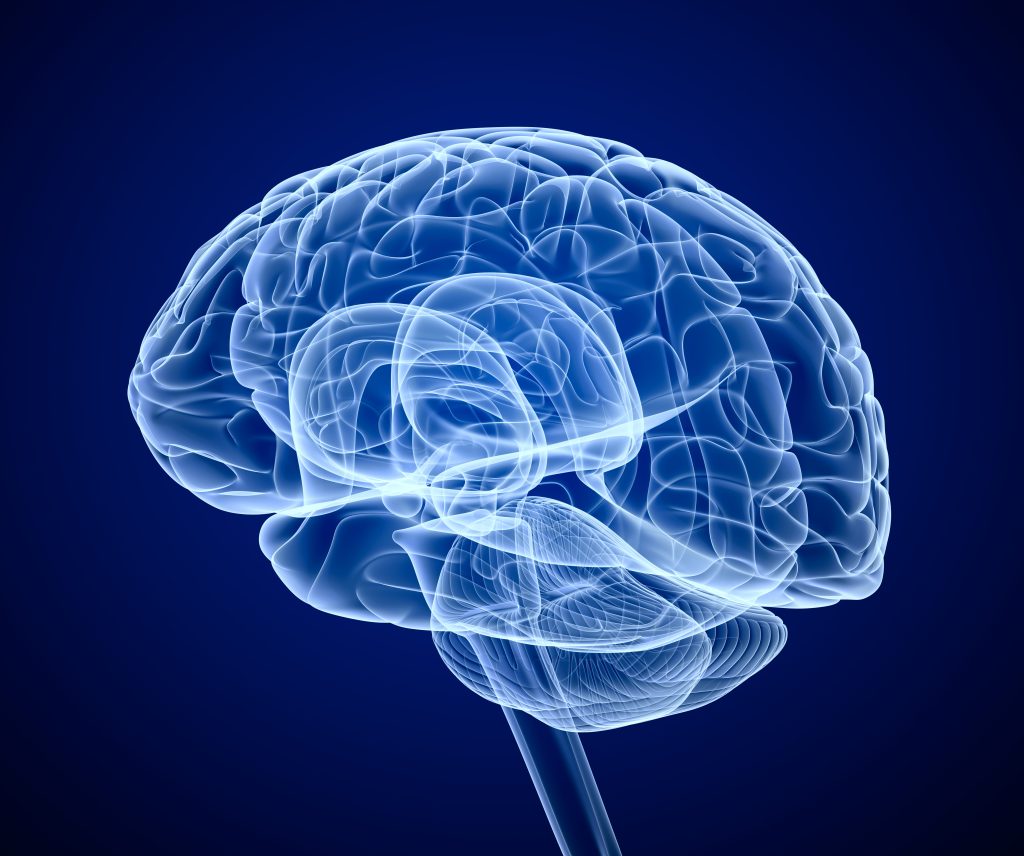
Neurofeedback is a non-invasive form of biofeedback training which is used to improve or optimise brain function. It's a safe and effective form of neurotherapy, and has been successfully used for over half a century. It helps train the neurons of the brain to fire in healthier patterns. With repeated training, this can result in more flexible and adaptive ways of thinking, feeling, sensory processing, and behaving, resulting in improved mental health and functioning.
Neurofeedback requires a significant commitment, both time wise and financially. Regular training is required once or twice weekly, with a course of 20 to 40 sessions usually required to achieve substantial and sustained improvement. Neurofeedback is usually funded privately. It's available in-clinic for adults and young people, however there's also the option of home training using the Divergence Neuro platform.
Training starts with a quantitative EEG (QEEG) assessment (“brain map”), which helps guide a more personalised and targeted training approach. A range of neurofeedback methods may be utilised depending on the individual, including traditional/amplitude neurofeedback, Z-Score neurofeedback, Infra-Slow Fluctuation (ISF) training, and LORETA based neurofeedback. Neurofeedback may be incorporated into broader psychological therapy, or used in more neurofeedback-focused appointments depending on the person’s presentation, goals, and other factors.
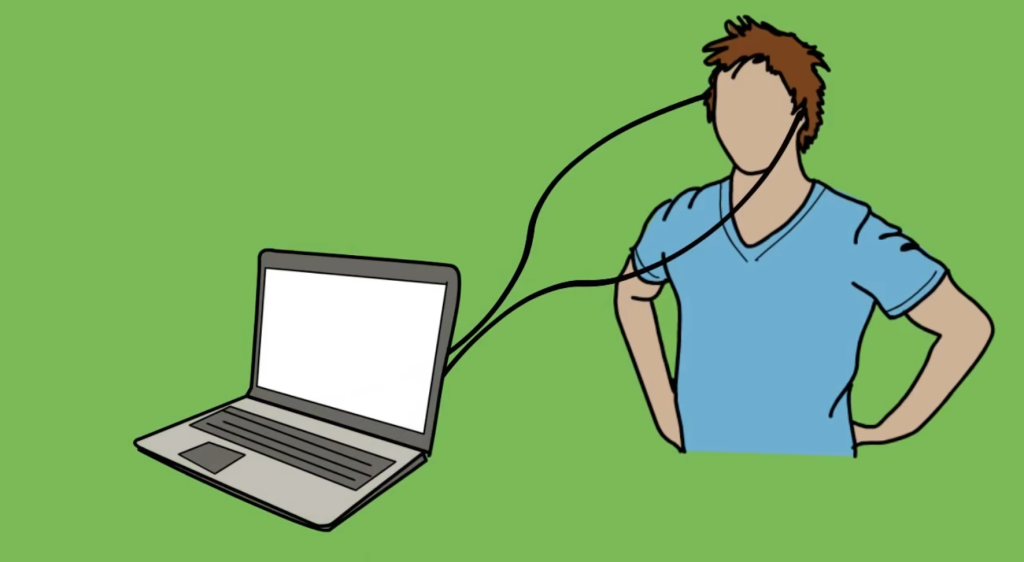
This short Youtube video by Mike Cohen provides a good introduction. Mike has also written a brief, easy to read book called "Neurofeedback 101”, and has FAQ info on his website: https://www.centerforbrain.com/neurofeedback/frequently-asked-question/
What does neurofeedback training involve?
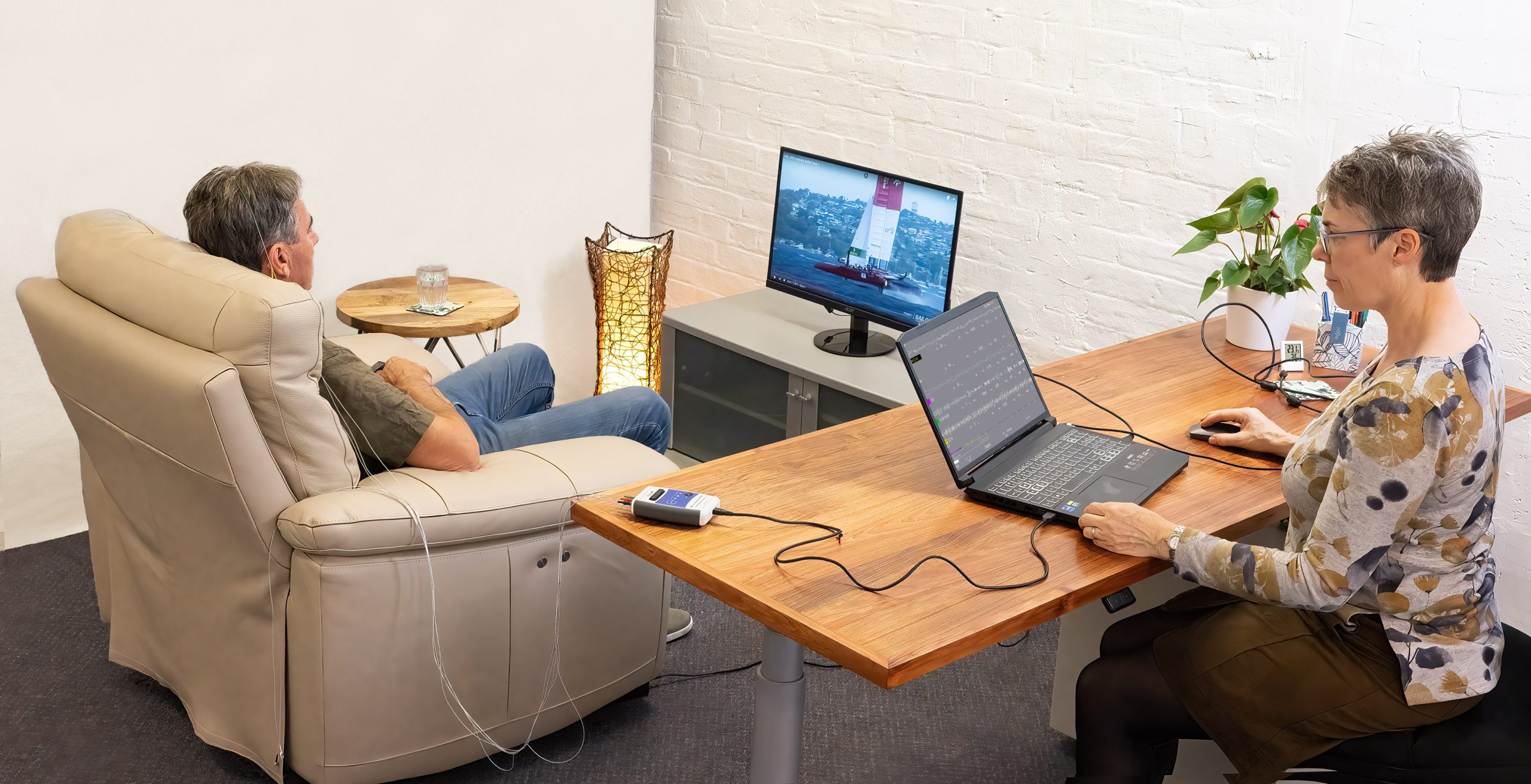
During neurofeedback training, one or more sensors are placed on the scalp to monitor the brain’s electrical activity (the electroencephalogram, or EEG). No electrical current is sent into the brain, making it a non-invasive approach.
Specialised software processes the brain’s activity in real time, with the information (“feedback”) presented through images, sounds, movies, or video games. For example, a movie on the screen may become brighter and clearer when the brain is producing more of the desired brainwave activity (such as a calm, focused state), and fade when it produces less. The process is somewhat like holding up a mirror to the brain, allowing it to observe and gradually modify its own activity.
Through repeated training, the brain learns to function in more flexible and adaptive ways. Over time, this can lead to lasting improvements in areas such as attention, emotional regulation, sleep, stress sensitivity, and overall functioning.
Most people require a course of approximately 20 to 40 neurofeedback sessions to achieve substantial and sustained improvement. Ideally training is conducted twice weekly, although weekly sessions can still be effective. Neurofeedback appointments are either 30 or 50 minutes, depending on the type of training provided. For stand-alone neurofeedback training, 50-minute appointments are generally required during the initial stages, with some clients later transitioning to 30-minute sessions.
How can neurofeedback support traditional therapy?
Traditional psychological “talk therapies” are often described as “top down” approaches, helping people become more aware of and change how they think, feel, and behave. Neurofeedback, in contrast, is often considered a “bottom up” approach, working more directly with the nervous system and patterns of brain regulation.
For some people, neurofeedback alone can be an effective approach, particularly those seeking greater self-regulation, improved sleep, reduced stress reactivity, or support in high-performance settings. For others, especially where there are significant mental health difficulties, combining neurofeedback with psychological therapy can be particularly helpful. When the nervous system becomes calmer and more regulated, people are often better able to engage in and benefit from therapy, including approaches such as EMDR.
To read about who can provide neurofeedback training, please go to the QEEG Brain Maps page
For more detailed information about neurofeedback, go to the ISNR website: https://isnr.org/what-is-neurofeedback
Types of Neurofeedback Available
Neurofeedback at Southern Psychology & Neurotherapy is not a one-size-fits-all intervention. Different people may respond differently depending on their nervous system patterns, goals, sensitivities, and clinical presentation. For this reason, training may draw from the following range of neurofeedback approaches.
Traditional Neurofeedback
(inc Alpha/Theta Training)
“Amplitude” or “power training” neurofeedback has been used for over 50 years. It typically involves training one or two areas of the brain, and works by encouraging the brain to produce more or less of certain types of brain waves.
Alpha Theta training, also known as “Deep State” training, is a special type of amplitude training, which encourages a very deep level of relaxation.
The vast majority of neurofeedback research has been based on amplitude, and as such, it currently has the strongest evidence base.

ISF is a relatively new type of training, with a rapidly growing evidence base. As well as helping regulate the brain, research indicates this type of training also helps regulate the autonomic nervous system, helping to settle the fight/flight response in the body. It can be a very powerful approach, and ideally involves weekly training.
For further information, go to https://isfassociates.com/
For ISF research, click here.
Home Training
Supervised home neurofeedback training is available using the Divergence Neuro platform. This utilises a traditional amplitude/power-based neurofeedback approach and can be a useful option for clients who would like to train from home and/or train more frequently between clinic appointments.
Training is completed using a BrainBit Flex or Calibri headset, both of which contain built-in EEG (brainwave) sensors. Although the equipment is used at home, the neurofeedback process is not “DIY” or self-directed. Training protocols are individually configured, monitored, and adjusted by Sally as part of ongoing clinical care.
Advanced
Neurofeedback
Approaches
Z-Score neurofeedback was developed in the early 2000s. In addition to training the amounts of various brainwaves, it can also target the communication between different brain regions. Multiple EEG sites (up to 19) can be trained at the same time. Z-Score training uses information from large EEG databases to help guide the neurofeedback process.
LORETA neurofeedback is also available. Rather than focusing only on activity at the surface of the scalp, LORETA is able to train very specific regions, deeper brain regions and brain networks using information gathered from a full 19-channel EEG recording.